The best bathroom lighting ideas don’t start with choosing a pendant light or deciding how many ceiling lights you need. They start with understanding how you’ll actually use the room.
Think about a typical day. You might need clear task lighting while getting ready in the morning, softer illumination when winding down after a long day and enough low-level light for a middle-of-the-night visit without switching on the whole room.
At Navigate Interiors, we look at bathroom lighting as part of the overall design. The vanity, mirror, shower screen, tile finish, natural light and cabinetry all affect how light behaves once the bathroom is finished. When these elements are planned together during your bathroom renovations, the room tends to feel more considered and comfortable to use.
Bathroom Lighting Ideas That Work With Your Layout
One of the most useful bathroom lighting ideas is to stop thinking about lighting as a single layer.
Most bathrooms benefit from a combination of ambient lighting, task lighting and accent lighting. Ceiling lights might provide general illumination, wall lights around the bathroom vanity help with grooming, while concealed LED lighting can highlight cabinetry, niches or architectural features.
Where it becomes interesting is how those layers relate to the floor plan.
Instead of placing downlights in an even grid across the ceiling, consider where people will actually stand. A ceiling light directly behind you at the bathroom vanity, for example, can leave your face in shadow. Lighting a shower wall rather than simply the floor can make the shower area feel brighter without filling the ceiling with fittings.
The right lighting design follows how you move through the room rather than treating every square metre equally.
Bathroom Vanity Ideas: Light Your Face, Not Just the Mirror
When considering bathroom vanity ideas, the mirror is often treated as the focal point and lighting is fitted around whatever space remains. It’s usually better to plan the two together.
A downlight directly above your head can create shadows around the eyes, nose and chin. Wall sconces or vertical lighting positioned beside the mirror bring light towards the face from the front and sides, creating more balanced task lighting. For grooming areas where accurate colour is important, LEDs with a high Colour Rendering Index, commonly 90 or above, are worth considering.
With a double vanity, this becomes even more important. Rather than automatically fitting one wall sconce on each outside edge, think about whether the centre of the vanity also needs illumination. Mirror width, basin positions and where each person stands should influence the lighting design.
Backlit mirrors create a sleek effect, but the glow behind the mirror shouldn’t always be expected to do all the practical work. The most successful bathroom lighting ideas often combine decorative mirror lighting with a separate source of useful face-level illumination.
Use Light to Make the Bathroom Feel Larger
Good bathroom lighting doesn’t create valuable floor space, but it can change how much of that space you perceive.
In small bathrooms, concentrating every light source on the ceiling can leave the walls relatively dark. Introducing wall lights, mirror lighting or soft illumination across a vertical tiled surface helps more of the room remain visible.
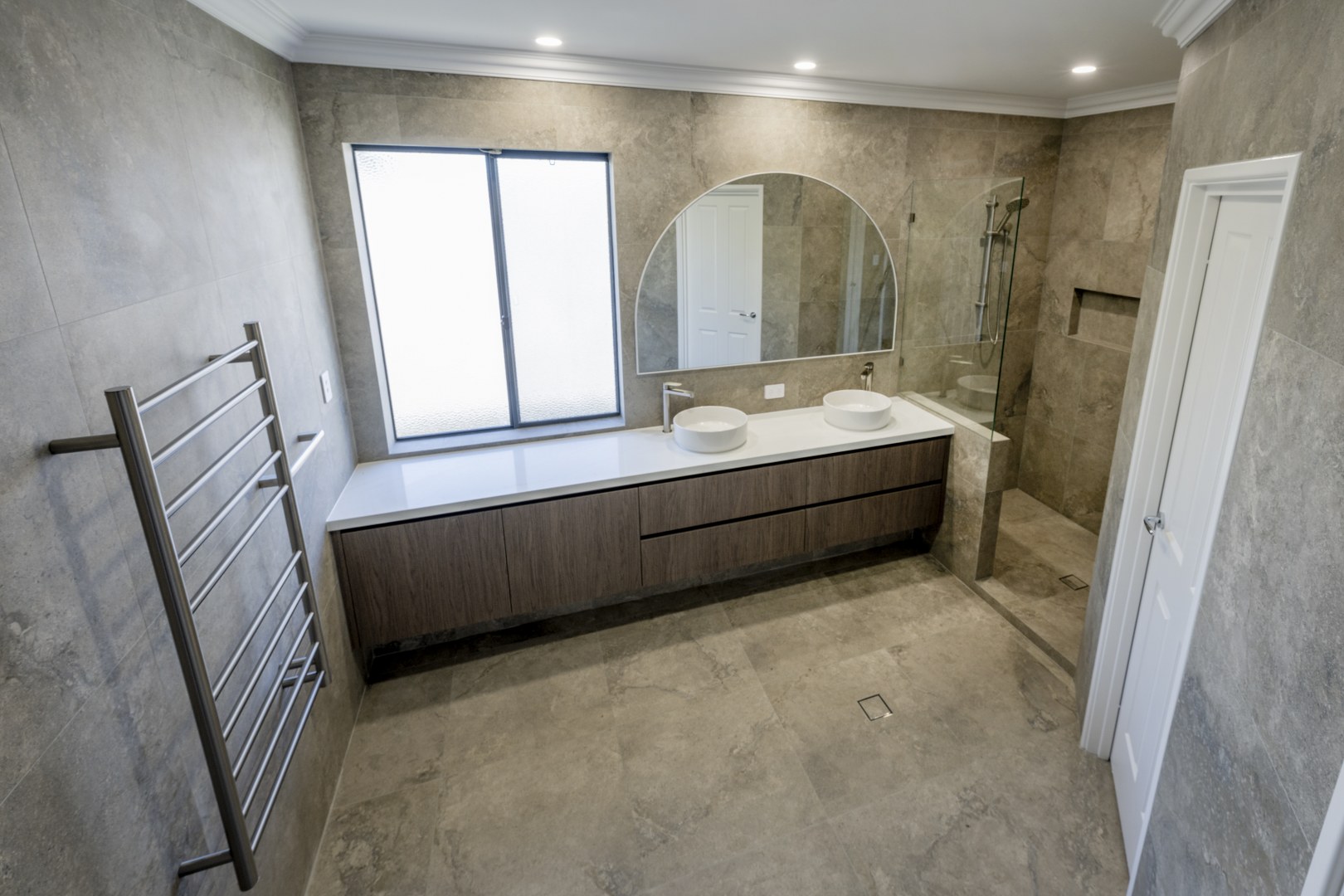
Floating vanities create another opportunity. A concealed LED below the cabinetry can visually separate the vanity from the floor, reinforcing the sense that it is floating rather than occupying the entire wall.
There is a practical benefit too. Low-level LED lighting on a separate switch or sensor can provide enough illumination for using the bathroom at night without turning on brighter ceiling lights.
These subtle bathroom lighting ideas are particularly useful in an ensuite, powder room or compact bathroom where every design decision has to work harder.
Think About What Your Materials Will Do With the Light
Lighting is often selected before homeowners consider what will happen when it hits the finished surfaces.
A highly polished tile, large mirror, shower screen or stone surface will interact with light differently from matte tile, timber finishes or textured stone. A bright exposed light source reflected directly in a mirror or glossy tile can become distracting, while softer diffused lighting can create a much calmer result.
Dark colours and matte black fittings also respond differently to light than a predominantly white bathroom. Instead of simply adding more ceiling lights, it can be more effective to deliberately illuminate the surfaces you want to see.
For marble, natural stone and textured tiles, carefully positioned accent lighting can reveal veining and surface detail. Used poorly, the same fitting can create unwanted glare.
This is one reason we recommend selecting lighting alongside tile, vanity, mirror and fitting finishes rather than treating it as a final electrical decision.
Luxury Bathroom Design Ideas Are Often About Less Light, Not More
Some of the strongest luxury bathroom design ideas aren’t about adding elaborate fittings. They’re about having more control over fewer, better-planned light sources.
A master ensuite might combine discreet ceiling lights with a wall sconce beside the vanity, concealed LED lighting and a pendant light used as a statement piece. In a powder room, where task lighting requirements are different, you have more freedom to use decorative lighting, darker colours or a dramatic shade.
The aim shouldn’t be to have every light switched on at once.
Being able to change the atmosphere of the room is part of the ultimate luxury. Bright task lighting works in the morning, while warm ambient lighting around the vanity, bath or open shower can create an entirely different sense of the space later in the evening.
You can see how materials, lighting and bathroom layouts work together across our recent renovation projects.
Don’t Forget the Shower Area and Wet Zones
Bathroom lighting also has to work safely around water.
Fittings installed near baths, showers and other wet areas need to be suitable for their location, with the appropriate IP rating and installation determined according to the applicable Australian electrical requirements. Standards Australia publishes the AS/NZS 3000 Australian/New Zealand Wiring Rules, while electrical installation work in Western Australia must be completed by appropriately licensed electrical workers.
This matters particularly with wet rooms and open shower designs. A beautiful pendant or wall light isn’t suitable simply because it fits the style of the room. Wet zones, fitting specifications and electrical requirements need to be considered during planning.
It’s also worth thinking about illumination inside the shower itself. Lighting a feature tile wall or shower niche can provide useful visibility while making the shower feel intentionally designed as part of the room.
Let Natural Light Do Some of the Work
Some of the most effective bathroom lighting ideas involve switching fewer lights on during the day.
If your bathroom has a window, skylight or another source of natural light, consider how cabinetry and internal walls affect it. Tall storage positioned beside a window, for example, could prevent daylight reaching deeper into the bathroom.
Natural light should also influence artificial lighting choices. Look at how the bathroom feels early in the morning, during the brightest part of the day and at night. The lighting design needs to fill the gaps rather than simply competing with daylight.
For a full house renovation, this planning can also help create a more consistent lighting approach between the bathroom, bedroom and surrounding spaces.
Plan the Switches as Carefully as the Lights
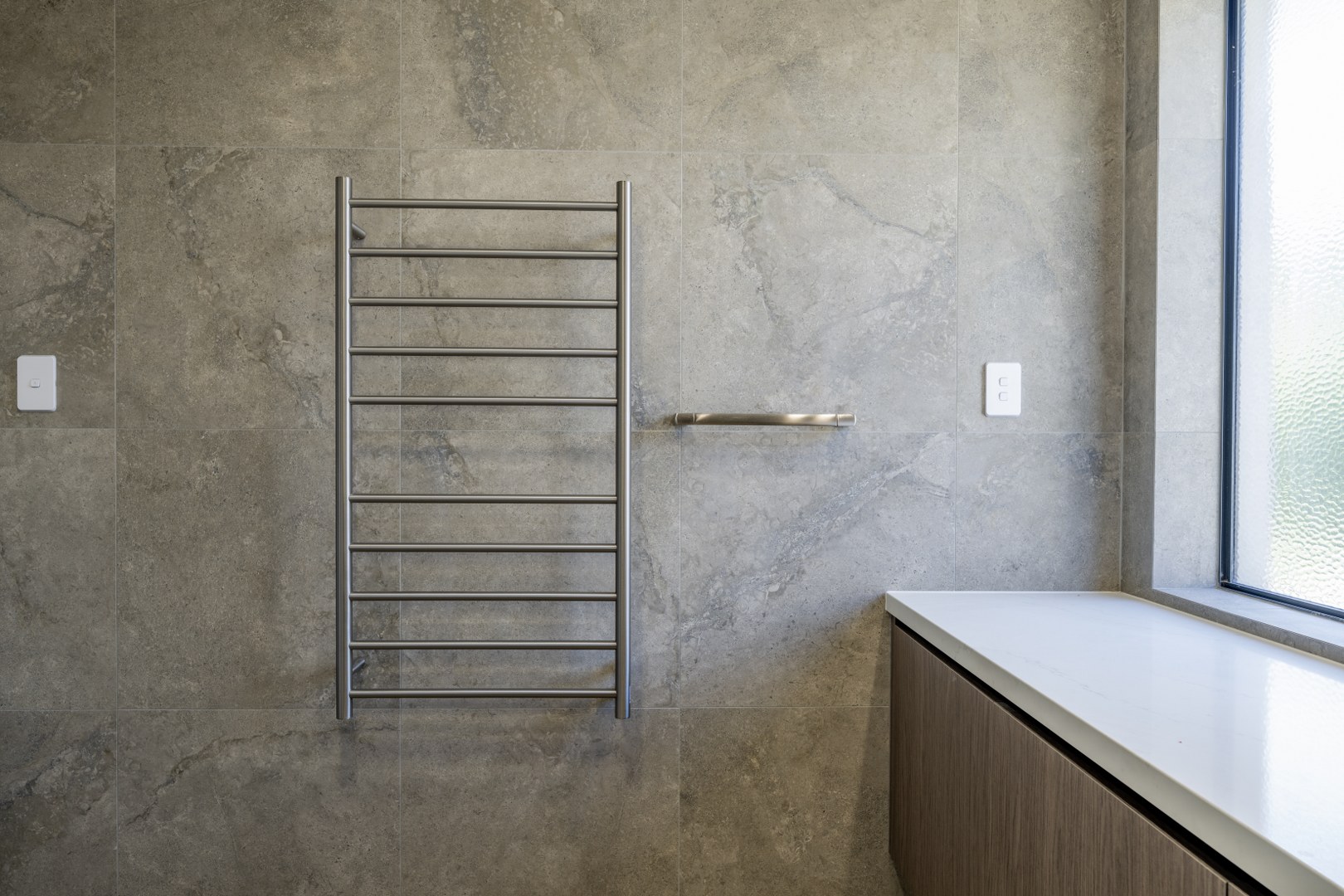
Here’s one detail that is easily overlooked: a beautifully layered bathroom isn’t particularly useful if every fitting operates from the same switch.
Where suitable, separating your ceiling lights, bathroom vanity lighting and accent lighting gives you more control over the room. Dimming suitable fittings provides another level of flexibility.
Think about the lighting combinations you’ll actually use rather than simply how many switches fit on the wall.
That is ultimately what separates thoughtful bathroom lighting ideas from decorative lighting choices. The goal isn’t simply to illuminate the bathroom. It’s to provide the right light at the vanity, shower, bath and throughout the room at the times you need it.
When lighting is planned alongside the layout, storage, materials and fittings from the beginning, it becomes part of how the bathroom works rather than something added to the ceiling once everything else has been decided.
Frequently Asked Questions
It depends on how you use the space. A neutral or slightly warmer light often feels more comfortable for general bathroom lighting, while clearer task lighting around the vanity can help when applying makeup, shaving or getting ready. Rather than using one colour temperature everywhere, consider how different lighting layers will work together.
Get Started
Navigate Interiors will bring help to bring your next project to life.