Tiles do a lot of the heavy lifting in any bathroom. They set the tone, carry the colour, and quietly influence how spacious or how cramped the room feels. If you’re planning a bathroom renovation and feeling a bit overwhelmed by the choices, you’re not alone.
With so many sizes, finishes, patterns and materials available, it can be difficult to know where to start. In this guide, we explore popular bathroom tile ideas, key planning considerations and practical tips for choosing wall, floor and shower tiles that work beautifully in your space.
Bathroom Tile Types That Work Beautifully Across Different Styles
There’s no one-size-fits-all answer when it comes to choosing tiles. The right tiles for your bathroom depend on the size of the space, how much natural light it gets, and the overall look you’re after. That said, a few tile styles are consistently popular and tend to work well in a wide range of modern bathroom designs:
- Large-format porcelain tiles (600 x 1200 mm and above): These are a go-to for good reason. These are oversized tiles made from durable porcelain, which means fewer grout lines, a clean and seamless look, and a slip-rated finish, making them a practical and stylish choice. Porcelain tiles are often used for that luxury bathroom look.
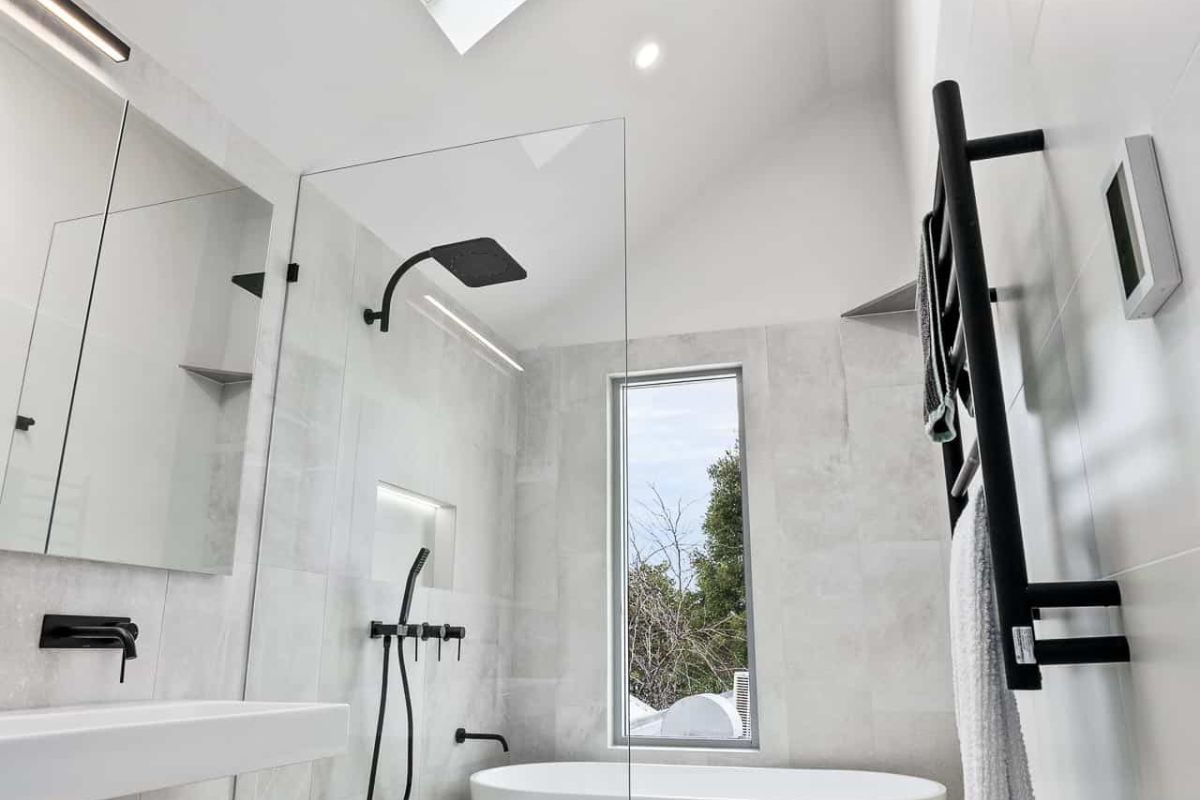
- Matte tiles: These hide water spots and fingerprints far better than glossy finishes, and they pair well with matte black tapware or brushed nickel for a modern edge.
- Textured tiles: Textured tiles have a raised, uneven or patterned surface that adds depth and visual interest to a bathroom. They work beautifully on a feature wall or in the shower area. There are three main types of textured tiles we recommend:
- Fluted tiles: Feature raised vertical grooves that add depth and a modern architectural look.
- Kit-kat tiles: Long, narrow mosaic tiles that create subtle texture through repeated lines.
- Stone-look tiles: Replicate materials such as travertine, limestone, slate or sandstone without the same maintenance requirements.
- Mosaic tiles: A solid choice for wet areas, particularly in a walk-in shower where slip resistance and water drainage are priorities. These tiles are arranged together on a mesh-backed sheet, so they’re easy to install across floors and walls.
Planning a Bathroom Renovation? Important Things to Consider With Your Bathroom Tile
Tiles aren’t just decorative. They’re structural decisions that affect layout, budget, and every other product choice that follows. Before you choose tiles, it helps to think through:
Room size and layout
Bathroom size and layout can greatly affect which bathroom tiles will enhance the look and function of the space. If you have a small space, large-format tiles can make your bathroom feel more spacious by reducing the number of visible grout lines, while smaller tiles may suit compact areas, curved surfaces and detailed layouts.
The bathroom’s shape also matters. Tile size should work with the dimensions of the walls and floors to minimise awkward cuts, narrow tile strips and unnecessary waste.
Tile colour and pattern also affect the sense of space. Lighter tiles can make a small bathroom feel brighter and more open, while darker or heavily patterned tiles may make the room feel more enclosed. In larger bathrooms, contrasting tiles, feature walls and zoning can help define different areas.
Reach out to our expert design team for advice on which tile will work for your bathroom layout.
Walls and floor cohesion
Wall and floor tiles should work together to create a balanced, connected look. They do not need to match exactly, but their colours, tones, patterns and finishes should complement one another.
Using the same tile across both surfaces can make a bathroom feel larger and more seamless, particularly in smaller spaces. Alternatively, pairing a simple floor tile with a feature wall can add interest without making the room feel too busy.
Repeating a colour or texture across the walls and floor can help tie the design together. Too many competing patterns can make the bathroom feel cluttered.
Slip resistance
In wet areas, slip resistance isn’t optional. For a shower or wet room floor, you need to be mindful of the pendulum test.
The pendulum test measures a tile’s slip resistance by swinging a rubber ‘foot’ across the wet or dry surface to simulate a shoe sole. Under the AS4856, the ratings range from P0 to P5, with P0 indicating very high slip risk (walls or very low-traffic areas) and P5 indicating very low slip risk (sloped ramps, tiles around swimming pools).
We recommend looking for tiles rated P4 or P5 for your bathroom.
Grout lines
Grout colour has a bigger visual impact than people expect. White grout on white walls reads as seamless and clean. A contrasting grout adds definition and character, but it can show staining more easily.
Underfloor heating compatibility
Most porcelain, ceramic and natural stone tiles work well with underfloor heating because they conduct and retain heat efficiently. Tile thickness, adhesive, grout and the type of heating system can all affect performance, so compatibility should be confirmed before installation. Underfloor heating also needs to be planned early in the renovation, as it must be installed beneath the tiles and coordinated with the waterproofing and floor levels.
Bathroom Colour Ideas: From Warm Neutrals to Sage Green
Bathroom colour schemes have shifted noticeably over the past few years. Cool light greys and stark white walls are still around, but warm neutrals and earthy tones are increasingly the go-to choice for modern bathroom design in Australia.
A few practical points on colour choices:
- Light colours reflect more light and make a bathroom feel larger, which is especially useful in a smaller bathroom or a powder room without a window. These are a classic feature of a Hampton-style bathroom, which is very popular across Perth’s suburbs.
- Earthy tones add warmth but can feel heavier in poorly lit rooms. Balance them with a floating vanity, clean lines, and good lighting.
- Bathroom paint on the ceiling or a non-tiled wall needs to be moisture-resistant. It also affects how your tile colour reads in the room, so test samples together before committing.
- Natural light plays a significant role. Perth’s strong sun can wash out tile colour during the day. Viewing samples in the actual space at different times of day is always worth doing.
Small Bathroom, Huge Difference: Making the Most of Limited Space
A small bathroom doesn’t have to feel cold or cramped. The tile choices you make can genuinely shift how the space reads.
Running large-format tiles floor to ceiling on one wall is one of the most effective ways to create a sense of height. Stacking tiles vertically (rather than in a standard horizontal layout) also draws the eye upward. Keeping the colour scheme consistent across the walls and floors reduces visual interruptions and makes the room feel more open.
A floating vanity, combined with light colours and minimal grout lines, adds to that effect. If you want a focal point without overwhelming the space, a subtle feature wall in the shower area is usually enough.
If you want to learn more about designing a small bathroom space, visit our blog section.
Walk-In Shower Tiles: What to Think About Before You Lay Anything
A walk-in shower or wet room is where tile selection gets more technical. The aesthetics still matter, but so does the waterproofing behind the tiles. All wet areas in Western Australia require a waterproof membrane installed to AS 3740, so this isn’t something to cut corners on.
For the shower itself:
- Slope and fall: Shower floor tiles need to be laid with a slope toward the drain. This affects tile size selection, since larger tiles are harder to lay on a slope.
- Shower niches: A shower niche is a recessed shelf built into the shower wall to hold shampoos and soaps. Unlike a shelf that projects from the wall, a niche sits within the wall cavity for a cleaner, more streamlined finish. The base tile in the niche should slope slightly towards the shower, so the water drains out, rather than pooling in.
- Soft curves and organic shapes: Rounded tile edges and curved profiles in the shower area have a spa-like feel that’s grown in popularity alongside the broader shift toward organic shapes in interior design.
Ready to Plan Your Bathroom?
If you’re thinking through your next bathroom renovation and want guidance from a team that handles design and build together, we’d love to hear about your project. At Navigate Interiors, we work with Perth homeowners to make the renovation process straightforward and the results worth it. Renovate with Navigate.
Frequently Asked Questions
Should bathroom tiles go all the way to the ceiling?
Floor-to-ceiling tiles can create a polished, high-end finish and may help a bathroom feel taller and more spacious. They are especially effective in showers, around baths and on feature walls. However, they can also increase material and labour costs, so it is worth deciding early whether full-height tiling suits your budget and overall design.
Are porcelain tiles or ceramic tiles better for bathrooms?
Porcelain tiles are generally denser and less porous than ceramic tiles, which can make them a strong option for bathroom floors and wet areas. Although porcelain tiles are typically more expensive and slightly harder to install, they offer greater longevity and require less maintenance over time.
Ceramic tiles can still be a practical and cost-effective choice for bathroom walls or areas with less exposure to water. In many renovations, both can be used together depending on the location and design.
Do bathroom tiles need to be sealed?
Some bathroom tiles need sealing, while others do not.
Most porcelain and glazed ceramic tiles are already resistant to moisture and stains. Natural stone tiles, such as marble, limestone, travertine and slate, are porous and normally need sealing before use, followed by periodic resealing. Grout lines also need sealing to reduce staining and damage.
Sealing is not a substitute for proper bathroom waterproofing. The waterproof membrane beneath the tiles is what protects the structure from water damage. Always check the tile manufacturer’s care instructions before applying a sealer.
What tiles are easiest to clean in a bathroom?
Large-format glazed porcelain or ceramic tiles are usually the easiest bathroom tiles to clean. Their smooth, non-porous surfaces resist moisture and stains, while fewer grout lines mean less scrubbing.
Smooth matte or satin finishes can also be practical, as they tend to hide watermarks better than high-gloss surfaces. Very textured tiles can look beautiful, but they may require more regular cleaning, especially in showers.
Get Started
Navigate Interiors will bring help to bring your next project to life.